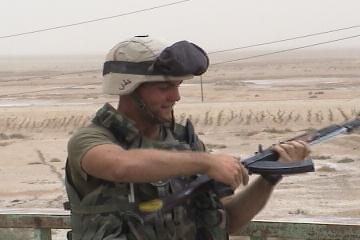
CNN got it wrong. The Ambulance Incident

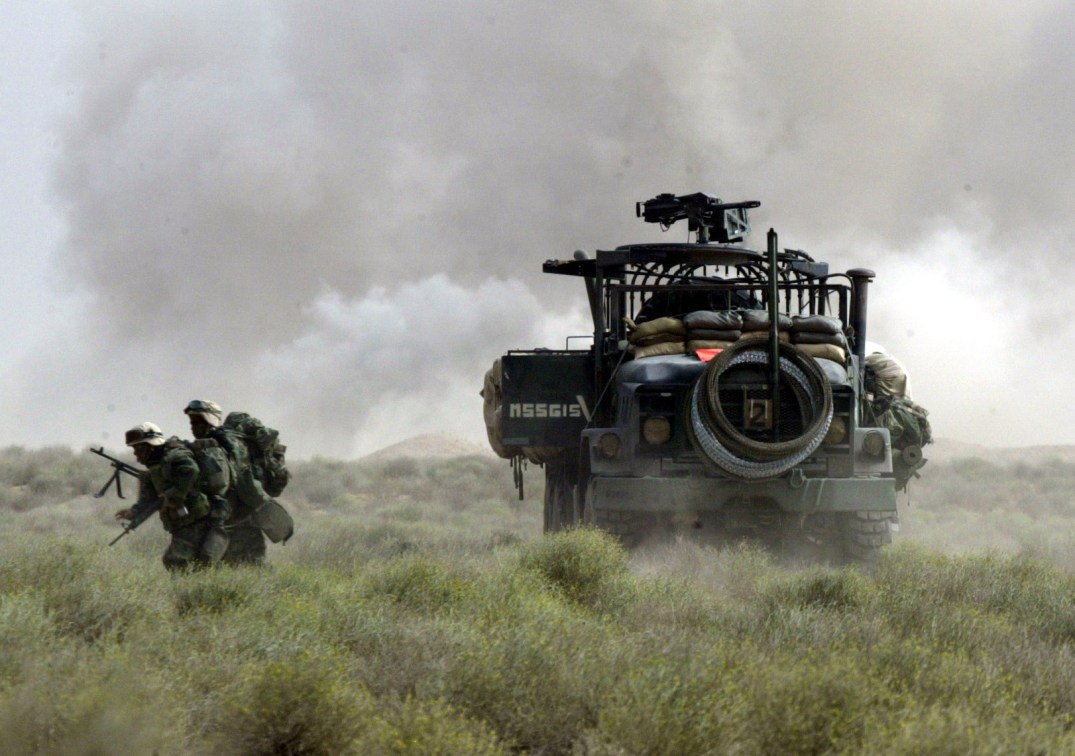
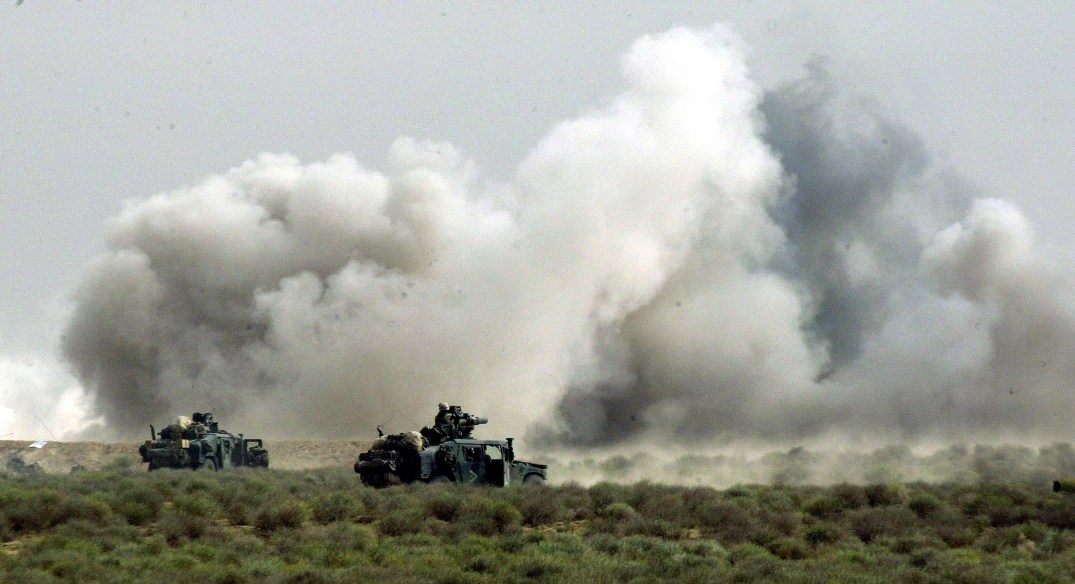
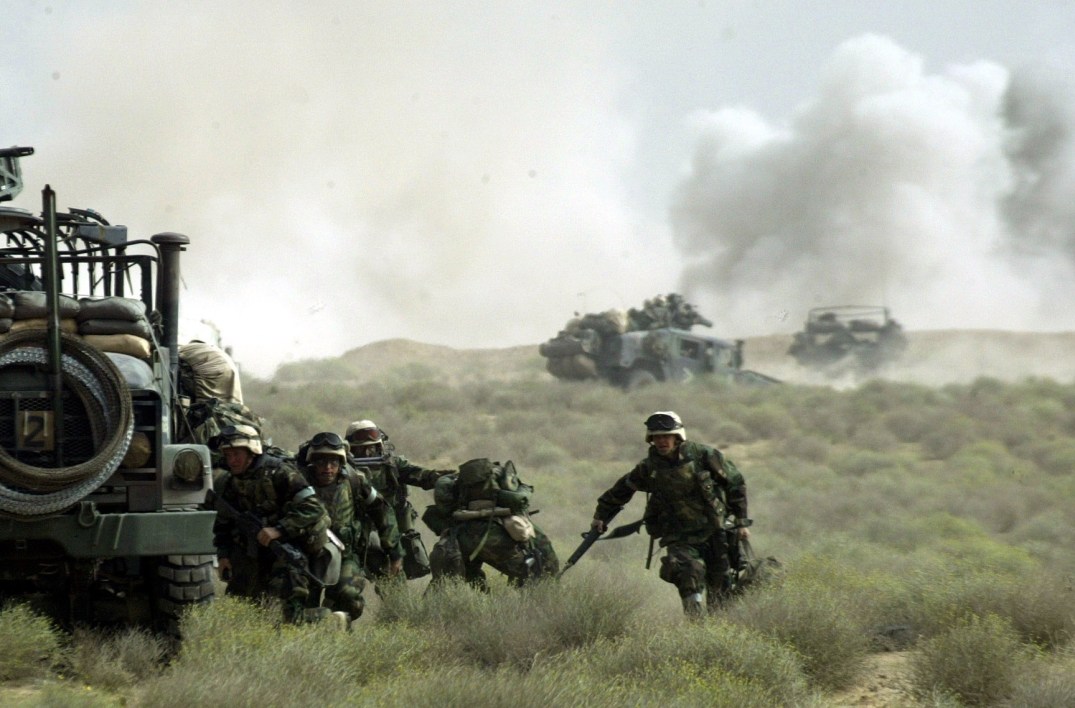
On September 12, 2004 elements of my CAAT section were attached to a company sized tank unit for a large operation. Twenty four tanks (I believe from 1st Tank Battalion, though I could be wrong) lined up on the north side of Fallujah as part of a series of “Tank Demonstrations” that our battalion had been running,  These demonstrations were part of a campaign to confuse the defenders in Fallujah about where and when the imminent coalition assault on the city would come from.
CNN firefight 1

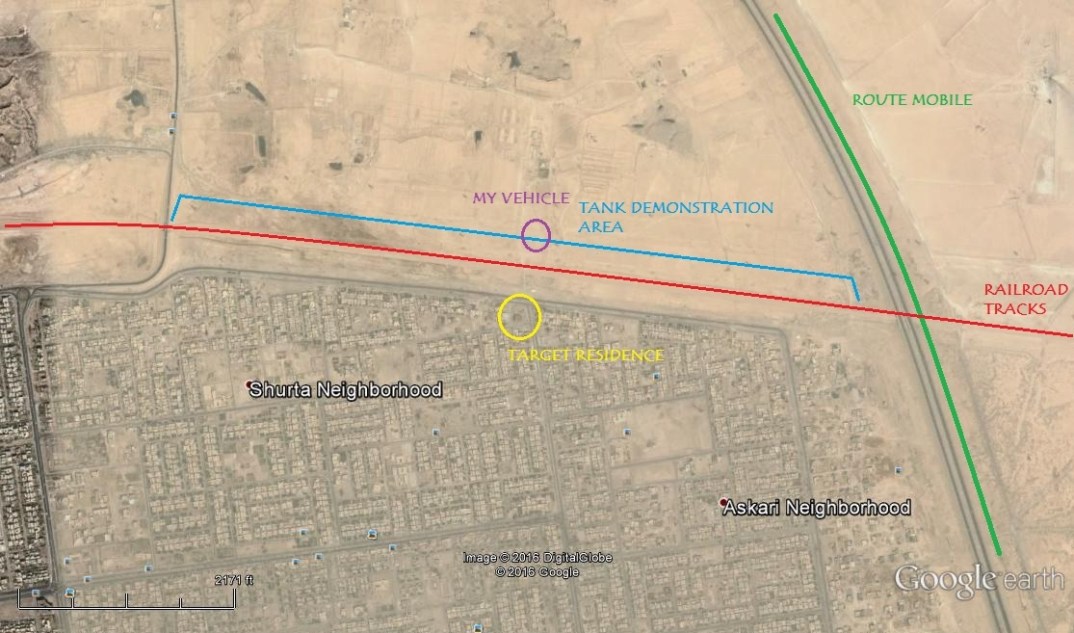
I was not in my regular vehicle, as the operation called for support from a vehicle with a MK-19 Automatic Grenade Launcher rather than the M2 mounted on my own vehicle. I decided I would tag along on Cpl Onsgaurd’s vehicle with LCpl Byro, and Cpl Kephart from Weapons Company 3rd Battalion, 5th Marine Regiment who had recently started our relief in place (RIP). Here is roughly how we were set up:

CNN firefight 2

We moved in at dawn from Camp Baharia on MSR Mobile and lined up on a raised dirt road that paralleled the train tracks on the north side of the city. My recollection is that we were essentially covering the whole north eastern half of the city. The tanks spread out online with about 50-100 meters between tanks, all facing south into the city. I positioned my vehicle in the center of the tank’s line near a dirt road that ran south over the railroad tracks and into the city. Soon after we stopped the shooting started.

The fight started as hidden snipers took single shots at the tanks lined up. In return the tanks used their excellent optics to locate firing positions, and then used machine guns initially to engage those positions. The firing started sporadically both to our east and west, nothing initially in front of us. After about 30 minutes of sporadic firing from the city, we heard the first mortar rounds firing. They were inaccurate, but we didn’t want to give them time to zero in on our positions. Our first engagement on the target house began when the tanks identified a mortar tube in partial defilade on the roof of the house. Several bursts of .50 caliber machine gun fire and a few tank main gun rounds failed to reduce the mortar site, and instead invited small arms fire from the residence.

Let me describe exactly what we were looking at. This was a three story residence with a large courtyard between us and the building. The courtyard was surrounded by 6 to 8 foot tall reinforced concrete jersey barriers (which I suspect were further reinforced with sandbags or something to that effect). The building itself also appeared to have been significantly reinforced. Most of the time when a tank main gun round hit a wall it would destroy a large portion of the wall. In this case the rounds were punching holes, but they weren’t much larger than the rounds themselves, indicating a strong possibility that the walls were lined with probably a dual layer of sand bags. We would later determine that in the courtyard there was at least one, maybe several bunkers dug into the ground. This is all important to note because a pretty significant amount of munitions was expended on this one compound.

Our vehicle engaged in the gunfight as the tanks started feeding us targeting information by use of the “grunt phones”

We used the MK-19 to engage targets that the tanks couldn’t (the main reason they had wanted us along). Because of the arcing flight of the Mk-19 rounds we could lob them over walls and into individual windows.

When the main gun rounds, .50 caliber machine guns, and some very accurate fire from our MK-19 failed to stop the increasing amounts of small arms fire coming from the compound we called in the first of 3 airstrikes. Here is video of the second airstrike:

After the third airstrike on the compound the small arms fire died off. Whether the fighters inside had been wounded, shell shocked, or had just run out of ammo is not known, but they had stopped firing for the moment.

During this brief lull a single vehicle drove out of the city, it was quickly identified as an ambulance. We held our fire, and watched it drive up to the target compound. The ambulance backed up to the wall surrounding the courtyard, where several of the jersey barriers had been obliterated by tank rounds. The driver got out of the vehicle and opened up the back doors. He then walked back to the drivers seat and got in.

This part is still crystal clear in my minds eye. Three men came running out of the courtyard, presumably from an underground bunker, with medium machine guns and an RPG in hand. They jumped into the waiting ambulance and slammed the doors shut as it accelerated away from the courtyard. I stared in shock that armed fighters had run brazenly in front of over a dozen tanks which had been pulverizing their fortified position. they had balls. The ambulance immediately turned south into the roadway running into the city. They didn’t make it. The tank to the left of us opened up with its coax machine gun, tracers punched into the driver’s side of the vehicle. It swerved into the rubble to the right and into the damaged wall of the compound. Just as it stopped, a tank main gun round hit the building just above it, blowing smoke and debris all over the ambulance. Before the vehicle was completely enveloped in smoke, a second main gun round made a direct hit on the ambulance. There was a flash of light with the metal on metal impact of the high explosive round. Then I finally hit the record button on my camera. Here is the immediate aftermath:

It was a pretty clear cut and dry shoot. The bad guys were armed, and did not appear to be injured in any way. They had sprinted to the ambulance. The driver of the ambulance clearly had made a plan to use the ambulance’s protected status to recover the fighters.

CNN apparently didn’t get the memo.

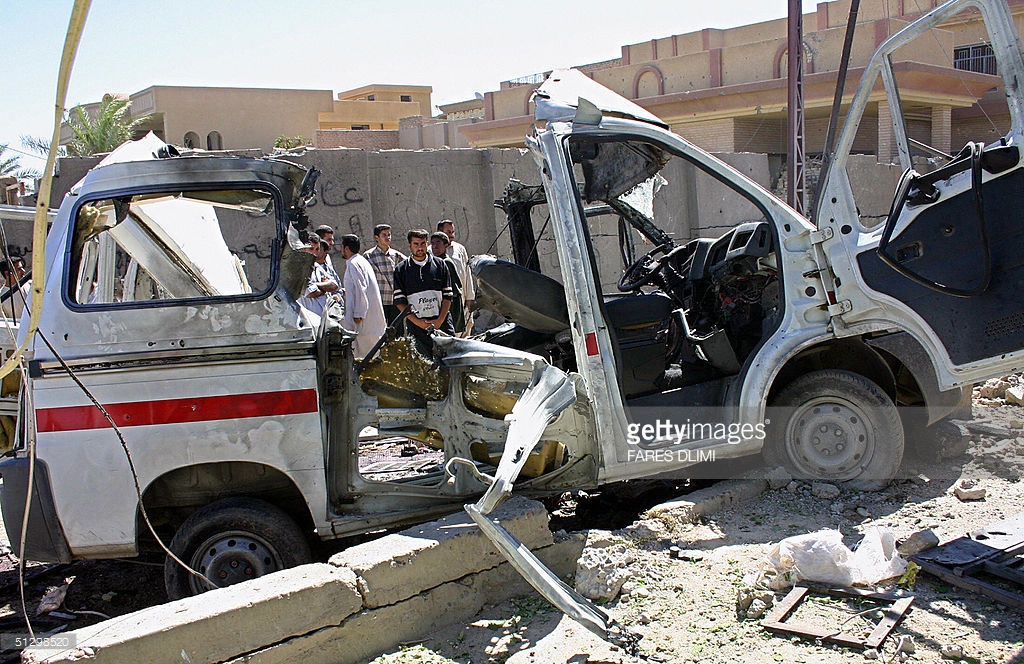
At Camp Baharia the next morning for breakfast, I saw a picture of the ambulance on the television. CNN was reporting that U.S. Marines had dropped a bomb on an ambulance carrying wounded women and children to a hospital. I was livid. It was very clearly the exact same ambulance with the exact same blast damage from the tank main gun round, and still sitting on the exact pile of rubble where it had stopped after the tanks hit the driver with the coax. Here is the image and accompanying caption:

Embed from Getty Images

Iraqis look at a destroyed Iraqi Red Crescent ambulance following a US air strike in the restive city of Fallujah, 13 September 2004. At least 15 people were killed and 20 wounded in a US air and ground assault on alleged Al-Qaeda operatives in Iraq’s notorious flashpoint city of Fallujah, medics said. ‘So far we received 15 bodies. Among them is an ambulance driver and two nurses, plus five wounded who were in the ambulance when it was attacked,’ said Falah Abdullah, an undertaker at the cemetery in Fallujah. AFP PHOTO/Fares DLIMI
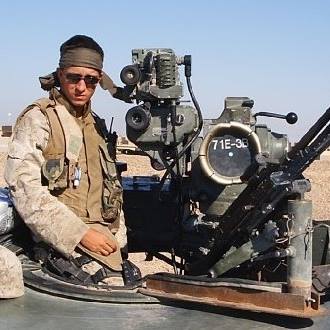


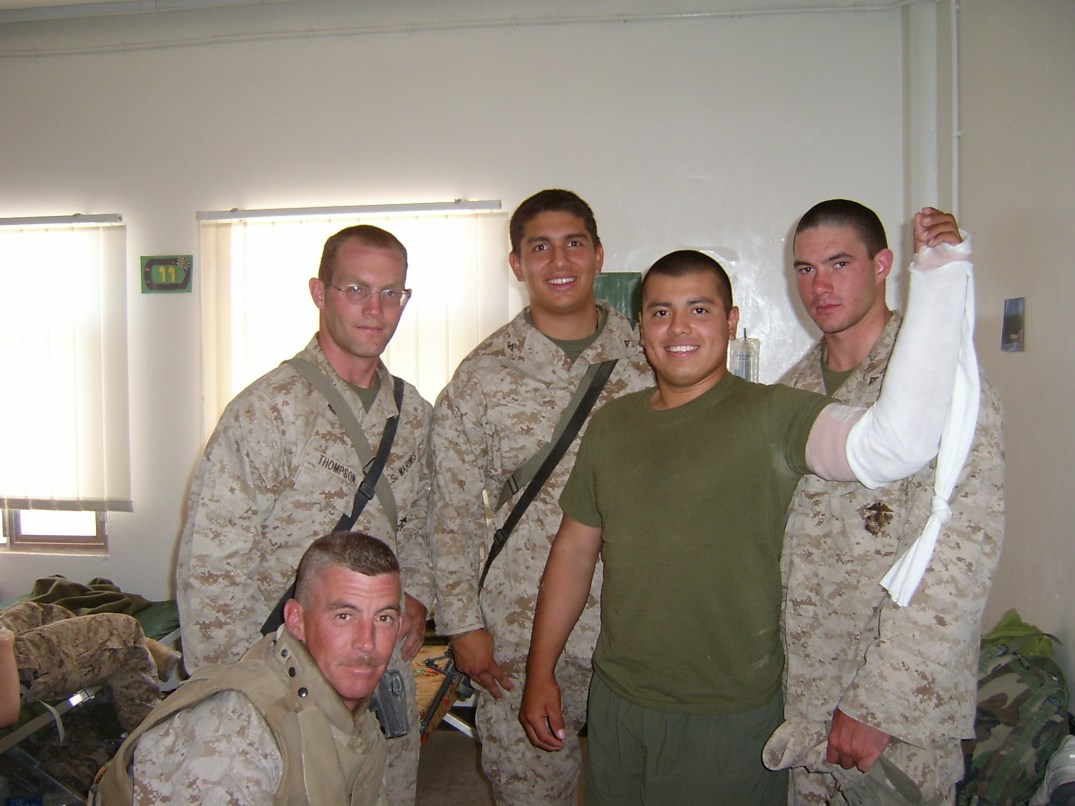
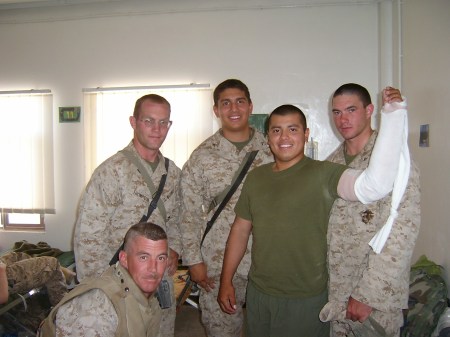
Four Marines on a Rooftop

Submitted by Corporal Joe Cosentino, one of my vehicle commanders. Describing the early few days of Operation Vigilant Resolve:

We had been in the city of Fallujah for a couple days already.  The fighting had been pretty heavy as we began securing our foothold in the Northwest corner of the city.  I’ll never forget the sight of the first night as we pulled in to that corner, under the cover of darkness, seeing the world in a solid green through night vision goggles.  If I close my eyes I can still the muzzle flashes, and I remember vividly the PAQ-2 infrared lasers searching frantically from window to window to find them.
I won’t get into the stories of what had happened in terms of where the other companies of BN 2/1 were, because honestly, I wasn’t as good as writing it all down as Ryan was.  Time has faded those memories, and even now the timeline of events become hazy, but what I remember I will share.

We had been in the city of Fallujah for a couple days already.  We had started to dig in, finding Iraqi buildings to occupy and securing our stronghold on the city.  It was at this time Echo Company had established itself in their school building.  I remember on the radio hearing when Marines from Echo and Fox had been hurt, but I wasn’t nearby or involved enough to recall more.  I only know the company was behind us, because it was at this time I captured Ethan and Phil in their hide position helping support Echo, and doing what the History Channel would later document. (Note: the dates on the pictures are incorrect.  I hadn’t figured out how to set the date on the camera, and I bought it a month and 12 days prior to this picture being taken. Hence the reason for February 12th.)

I was a Vehicle Commander for CAAT Platoon, WPNS Co 2/1, and a young Corporal leading Marines for the first time.  After the push into the city and several days of fighting to gain our footholds, we had secured a walled home that we could use to provide cover for our Humvees while some of the 2/1 Companies who had secured the school house and other buildings were conducting foot patrols into the city.

vehicle in hide spot

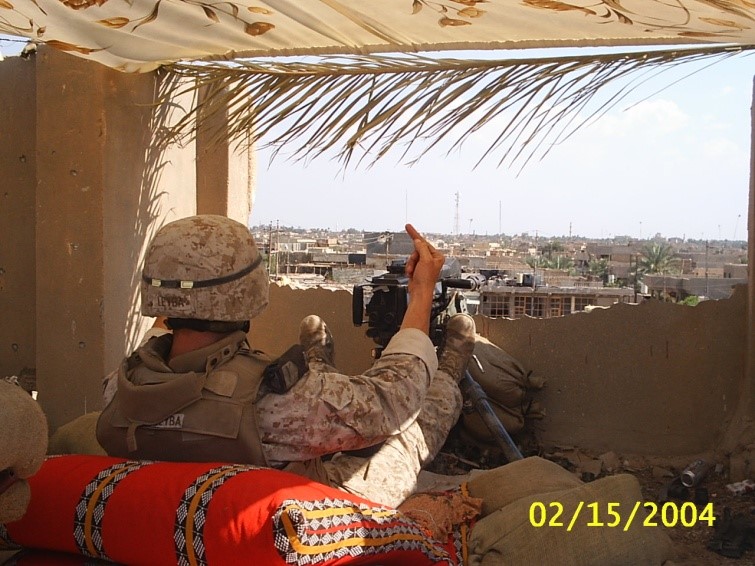
We had attempted mounted patrols once into this corner of the city, but it hadn’t ended well.  At this time, we were still driving older Humvees, we hadn’t received any armored ones yet.  Hell at this time, we were still using IFAV vehicles, and neither of which were good strategically in urban environment.  The mounted patrol we had attempted had insurgents jumping out and shooting up the vehicles, and by the grace of God, no one had been seriously injured.  (Corporal Hartrick had taken a round in the thigh, but was back in action several days later).  So we secured a few buildings that we could use to provide cover for the vehicles.  While Echo and Fox Companies were conducting the dismounted patrols and clearing buildings through the city, we had dismounted some of our heavy weapons to move to rooftops, to provide covering fire into the city.  Below is a picture of our dismounted MK-19 on the rooftop of one the buildings.  My apologies for the crude gestures (although the insurgents definitely deserved it).

The finger

The dismounted MK-19 provided cover fire for when USMC Cobra’s and F-16’s were conducting maneuvers over the city.  Each time one of the Helos flew over the city, insurgents would spring from their rat’s nests in an attempt to pop a few Ak-47 rounds off at them.  It was only at this time that we could get clear sights on which buildings they might be occupying, and we could attempt to take them out or at the very least suppress them so our air could do their jobs.

In an attempt to get better sight lines on the enemy, 4 young Marines pushed about 2 blocks south of friendly lines.  Corporal Onsgard, Lcpl Twitchell, Lcpl Byro and myself.  This building would become our home for the next 48 hours, and this is where my story truly begins.

We secured a 3-story building, one of the tallest in the area that provided some pretty solid views of the Northwest corner of the city, and really gave us a great view of most of the area rooftops where the insurgents had been going to fire shots at the incoming helicopters.  Below are some views of Fallujah:

We spent hours on that rooftop, calling out targets, and having a pretty awesome view of USMC power and authority as Woody, Darkstar, and Oprah made some strongholds of enemy insurgents pay.  I want to say that this extreme measure was used after the attacks on Echo and Fox company patrols had taken heavy fire, and Marines had been wounded and killed.

This is one of several airstrikes called in by Joe’s team. I had navigated the maze of trip wires to join them on the rooftop for a few hours.

The days were some of the longest days of my life, with very little sleep.  Long hours spent in the sun calling in movement on the rooftops.  The near impossible task of marking targets for hellfire missiles with smoke grenades at ranges of over 500 meters from Onsgard’s grenade launcher.  At one point, one of the strafing runs by an F-16 almost put us down with friendly fire, and LCpl Twitchell took a small piece of shrapnel to the hip.

This is two of the dozens of strafing runs conducted by USAF F-16 fighter jets. As you can see they were coming in low enough to be vulnerable to ground fire, making the suppression of firing points of utmost importance. You can clearly hear the gunfire from insurgent positions in the background.

Thinking back and having the hindsight that only time can provide, this was some of the riskiest and dangerous moments I endured during Operation Vigilant Resolve.  On this rooftop was just the 4 of us Marines.  That isn’t what had me worried.  A fire team of Marines could have held back the gates of hell and we had a Battalion of Marines behind us.  But being a few blocks south of friendly lines, on a rooftop by ourselves, in the midst of a city, exposed to insurgents more than willing to fight–It was just us.

We endured our own share of fighting on this rooftop.  We had “secured” the house by stacking pots and pans on most of the doors leading up to the rooftop, and I know we setup a few trip flares and a claymore within the house as our means of ensuring we’d at least be alone on the rooftop.  I remember our LT almost set off one of the flares just trying to get up to check on our position.  On top of marking targets, we had engaged plenty of the rooftop fighters with our own M16’s.  In my closest battle with the enemy, 4 enemy insurgents had realized we were on this rooftop.  It started early in the morning after a long night of being awake.  We had started taking fire into the wall of the roof we were on from almost directly below us.  Less than 50 meters away, 4 insurgents had begun firing on our position from a corner home directly across the building in front of ours.  We were in the midst of returning fire when a grenade landed on the rooftop in front of our position.  I had barely noticed it when Onsgard had screamed “get down” and shoved me to ground behind the wall we were using for cover.   We waited for what I could describe as eternity for that grenade to go off, which was probably only 20-30 seconds, only for nothing to have happen.   We both peaked over the wall to see what was going on and why there were no loud booms.  The insurgents, as untrained as they were, had forgotten to pull the pin on the grenade.

As we breathed a sigh of relief, Onsgard and I said we cannot let them do that again.  Finally locating the end of a walled home from which they were shooting, Twitchell, Byro and I began providing suppression fire to corner them, while Onsgard loaded his M203 with another grenade.  Our return engagements had created the perfect pattern for this attack, as we shot they took cover, and when we stopped and took cover ourselves, they returned fire.  Noticing the pattern, I told Onsgard I would shoot, take a small pause and when I did this time we would not take cover, but wait for them to pop out to engage us back.  At this time, two insurgents popped out, one was taken down by me while the other by Onsgard’s M203 grenade round.  We waited for the remaining two insurgents, but they had fled, apparently deciding they had enough of the marines who had taken out their friends.

This is the video Ryan took of Joe’s four man team on the rooftop in the Jolan Heights neighborhood as they were assisting Fox Co in calling in airstrikes on targets.

These 48 hours on the roof were daunting; we were exhausted and had barely slept.  That night after the attack, we were settling in for another long night when we got word that the AC-130 specter gunship would be on station.  We were told to mark the rooftop with IR chemical lights, and we finally got to close our eyes a bit.  That AC-130 gunship engaged targets, including what I was later told was a squad size force moving directly towards our area.  I never got a chance to thank the specter pilot and gunner, but if they ever read this, Thank You.  Below is a picture of Onsgard on day 2, during a break for water and food, and to get out of the sun. (His Norwegian skin didn’t fare well in the Iraqi sun.)

Here is a clip of one of the nights that “Slayer” was on station. Slayer was the call sign for the first AC-130 gunship that supported us during Vigilant Resolve.

Once again, hindsight becomes clear, and time fades other memories.   After our 48-hour vigil, we decided it was time to descend from our roof since the enemy knew our position.  We pulled out of the city several days later, which I only remember as being a political move, not strategic.   But what I will say is I’ll never forget the three Marines who secured the roof in city of Fallujah with me. Semper Fi.


Sean’s Jawa Motorcycle, or The Night I Jumped in a Ditch

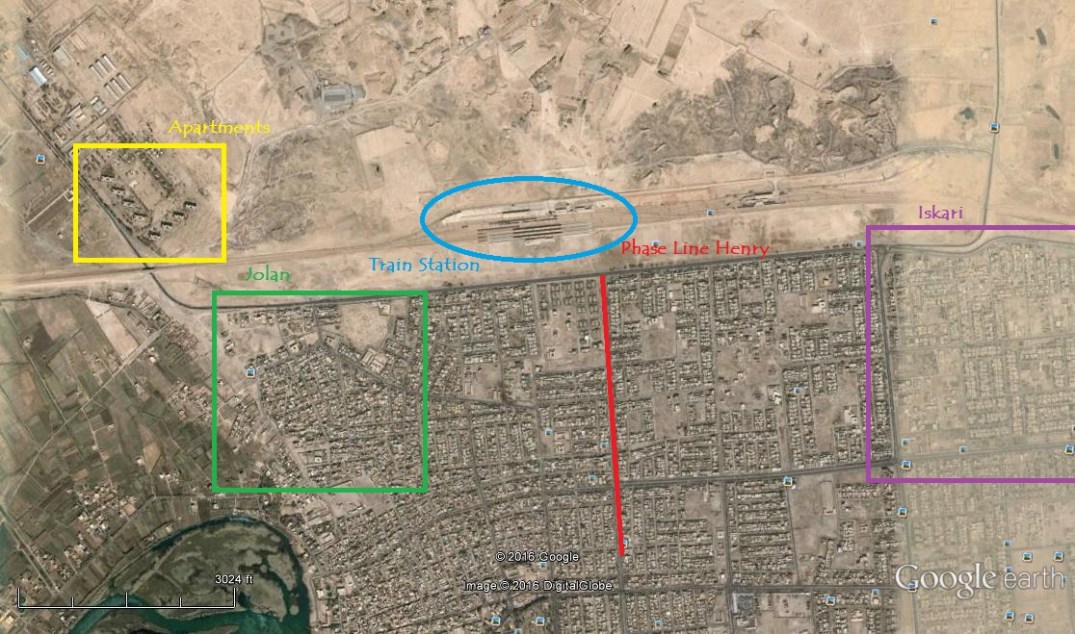
April 28, 2004 my sister section of CAAT got into a heavy firefight at the train station on the North edge of Fallujah, near Phase Line Henry:

N Fallujah Map

I will back up a moment for the sake of clarity. Weapons company was made up of two entities, 81s platoon which were the 81 millimeter mortar guys who provided the Battalions’s heavy organic indirect fires, and 2 CAAT platoons. Every deployment I went on with 2/1 the CAAT element of Weapons Company was structured differently. In 2001 we were divided into Anti-Armor Platoon (in M151 jeeps and later in G-Wagons that could be loaded internally into helicopters) and Counter Mech platoon in heavier Humvees. In 2003 we sent all of our G-Wagons over to Golf company (the battalion helicopter company) and CAAT was made up solely of Humvees. In 2004 we got the G-Wagons back from G Co, and integrated them in with the Humvees into two equally sized homogenized platoons of two sections each. So 1st platoon was commanded by Lt. Scott and had two section leaders, SSgt H had ‘Offspring’ and SSgt V had ‘Roadtest’. 2nd platoon was commanded by Lt. D and had two section leaders, SSgt G had ‘Pennywise’ and Sgt T (me) was in charge of ‘Pilsner’.

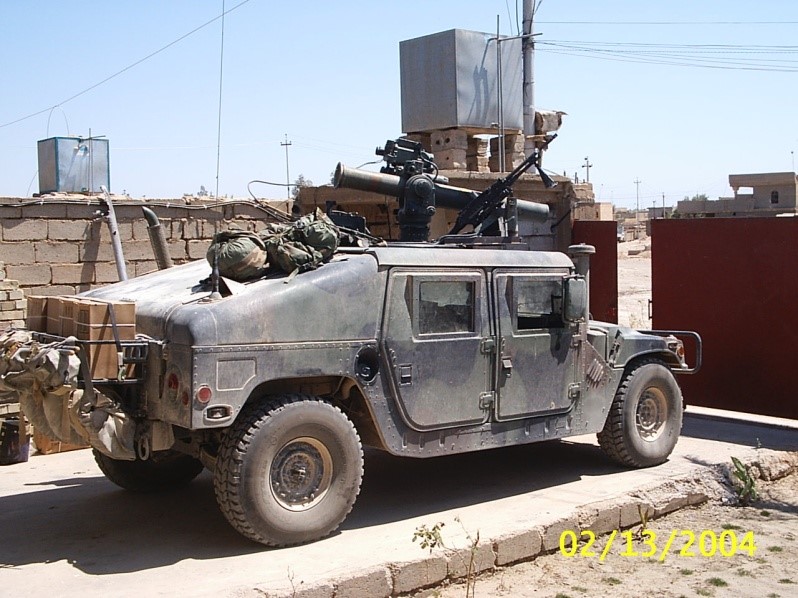
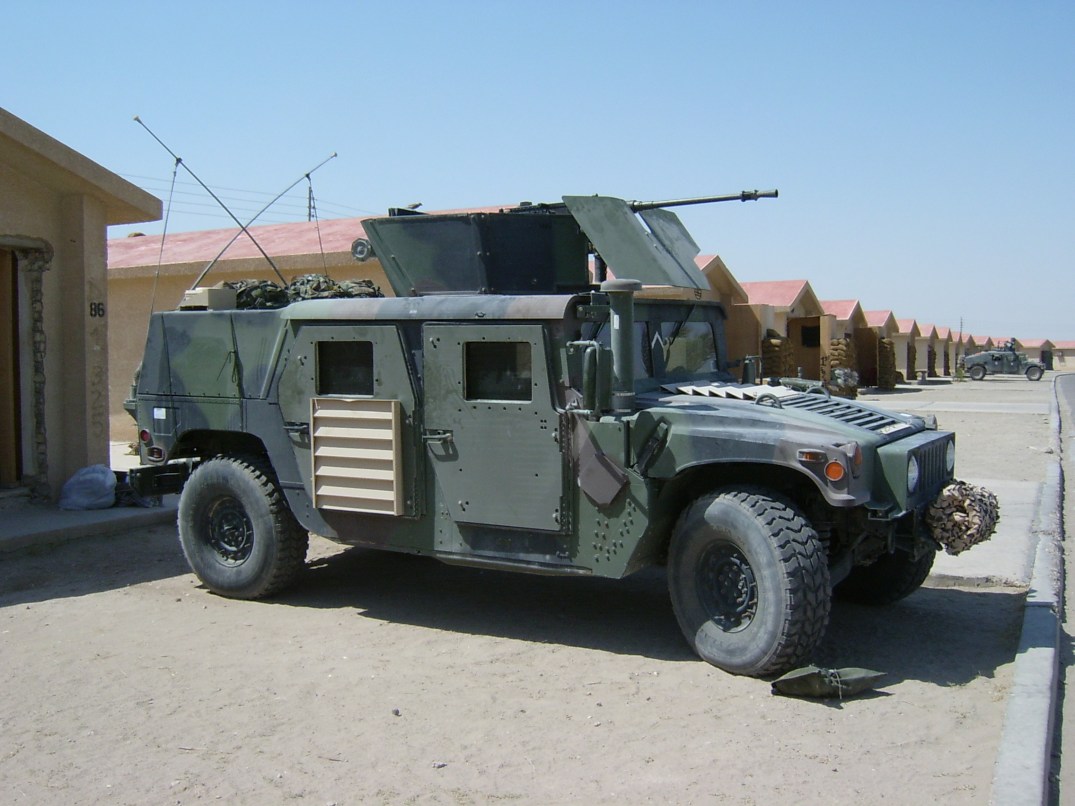
during the course of the deployment we started with the G-Wagons, one to each section plus 4 humvees, but with my section being G-Wagon heavy with 3 G-Wagons plus 3 humvees (I had the biggest section)Here are some pictures of the different vehicles:


G-WagonsDSC00166DSC00162

Up Armored Humvee

SAMSUNG DIGIMAX 420
SAMSUNG DIGIMAX 420

So, back to the story. Offspring got into a heavy firefight at the train station. Pilsner (my guys) went and reinforced them during the fight. Offspring ended up taking off to refit and get some rest and we took over the train station post, sitting in defensive positions watching the North edge of the city and down Phase Line Henry. While we were there an old woman who lived in the train station fed some intel to Lt. D about insurgent activity in the area. Sometime right before midnight Roadtest and Pennywise relieved us and we went back to get some sleep.

Sometime the next day after our guys had withdrawn from the train station, two insurgent enforcers beat the woman severely enough that she had to be air medevaced to a hospital in Baghdad or Camp Fallujah.

We were briefed the following evening, April 30th that the woman had been attacked by two insurgents in their 20’s with a baseball bat who rode a red Jawa motorcycle around at night and visited locals who were suspected of helping coalition forces. It just so happened that very night we located the red Jawa motorcycle and the two enforcers…

We were on our normal patrol securing MSR Mobile for coalition traffic when one of the gunners spotted the red Jawa north of us in a rural farming area. It was fairly easy to pick out because it was acting VERY oddly. It was dark, maybe around midnight, and we would see a single headlight come on for a few seconds, slow down and then vanish. A few moments later we would see the headlight moving quickly again, slow down and then vanish. It turned out later that whenever you hit the gas on the bike the headlight would short circuit and go out and would only turn on again when coasting. That is likely the only reason we were eventually able to catch up to it.

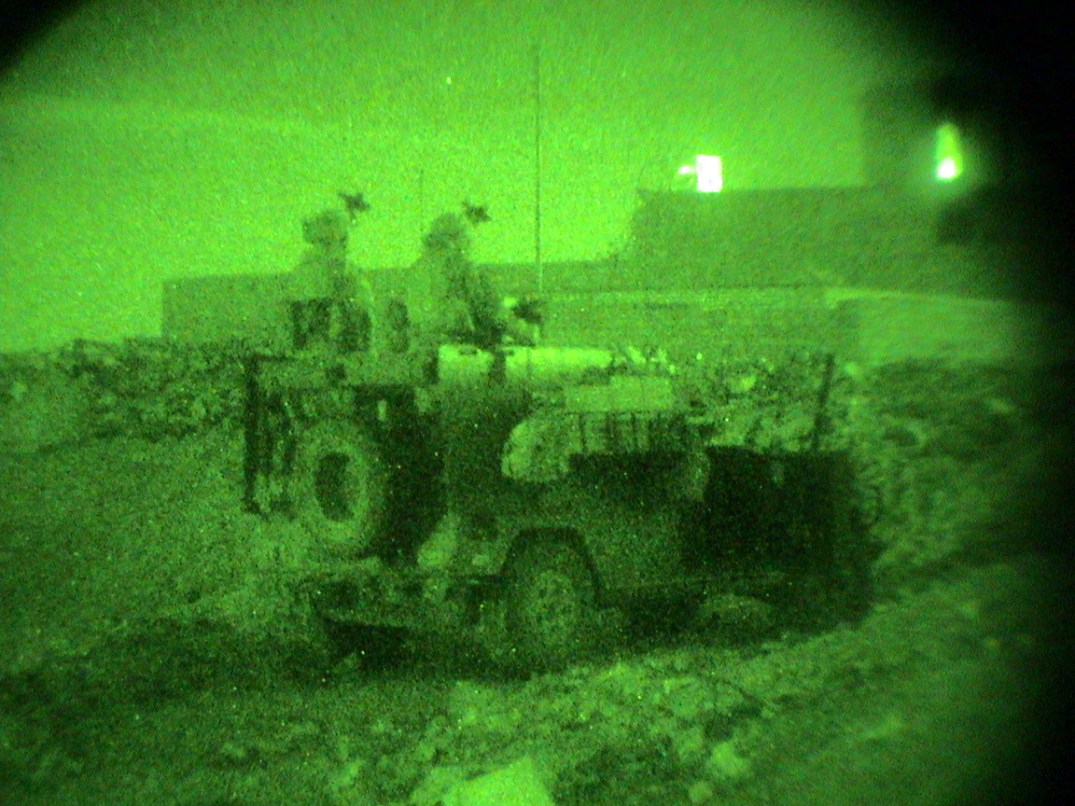
At any rate we went after the bike. We started out blacked out, no headlights and running only on Night Vision Goggles (NVGs). We hadn’t figured out yet that the motorcycle was crippled. So I figured the best way to catch it was to try and sneak up on it…in a humvee. It worked for a while, we followed it as it crisscrossed the dikes above the farm canals slowly making gains. Eventually the bike noticed us and began to ride more frantically, it was then that my gunner figured out that the bike’s light was malfunctioning. We went full lights on and my driver Danny C hit the gas. Danny should have been a race car driver, or a stunt driver – he was awesome as we raced along very narrow raised dike roads in the dark chasing that Jawa. We were still gaining on it, as it turned on to a long straight stretch I knew we had it. There was no where for it to go. I told Danny to floor it, and we were gonna pass the motorcycle. As we started to pass it I told Danny “hit the brake when I tell you, don’t wreck us though”. We passed the Jawa, he was on my side. I kicked the door open and yelled “Brake”!

—Here is the picture of my humvee again. I was in the front passenger door, it is reinforced ballistic steel, double layered with a four inch thick ballistic plexiglass window. It probably weighs 300 pounds.

SAMSUNG DIGIMAX 420
SAMSUNG DIGIMAX 420

I kicked that 300 pound door open directly in front of the Jawa. They hit it and went into the canal ditch. So did I. I jumped out while the vehicle was still hammering to a stop, and landed right on top of both enforcers and the bike. One of them punched my kevlar helmet, the other one was being shoved facedown in the muddy gunk by my knee. The first one was small, maybe 5’4″ and scrawny. I weighed close to 200 pounds with all my gear on. He was losing quickly. Then another Marine showed up, and another, and then more. We drug them up the embankment, searched them, and tied them up and blindfolded them. threw one in the back of my humvee, the other in another humvee.

Ray L asked “What about the bike?”. I could care less about the bike, but the guys wanted it. Who would I be to deny them of their trophy?

“Who can run this thing?” I asked.

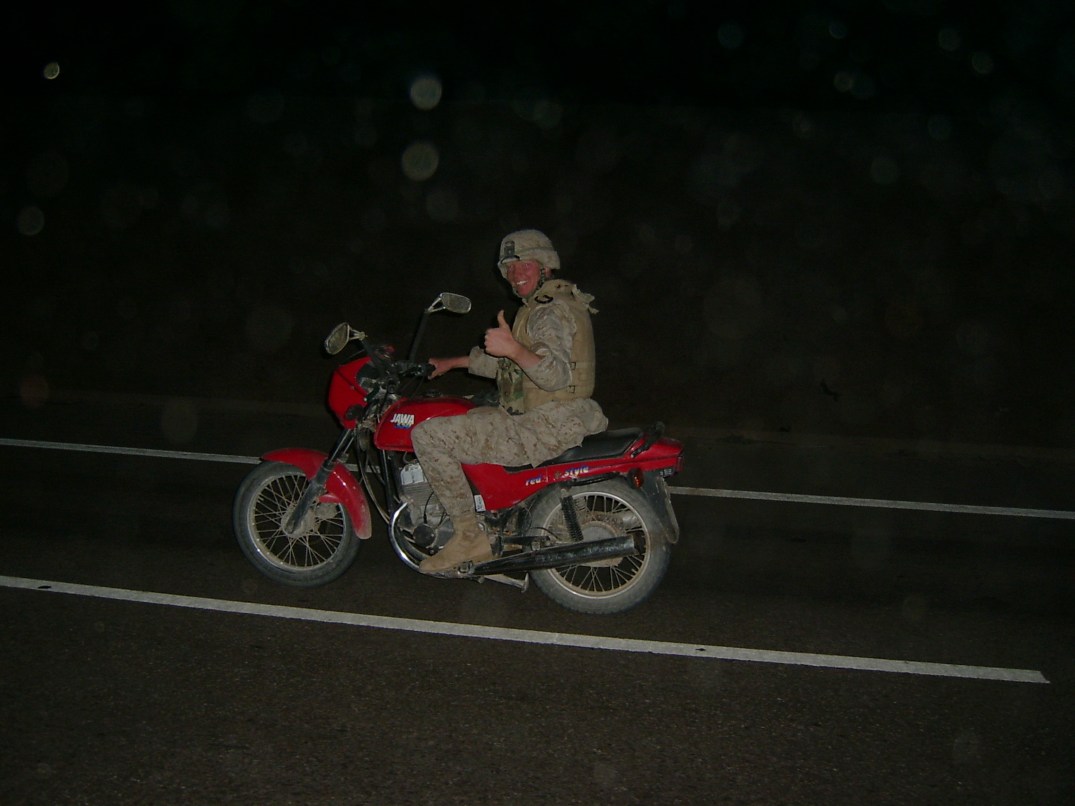
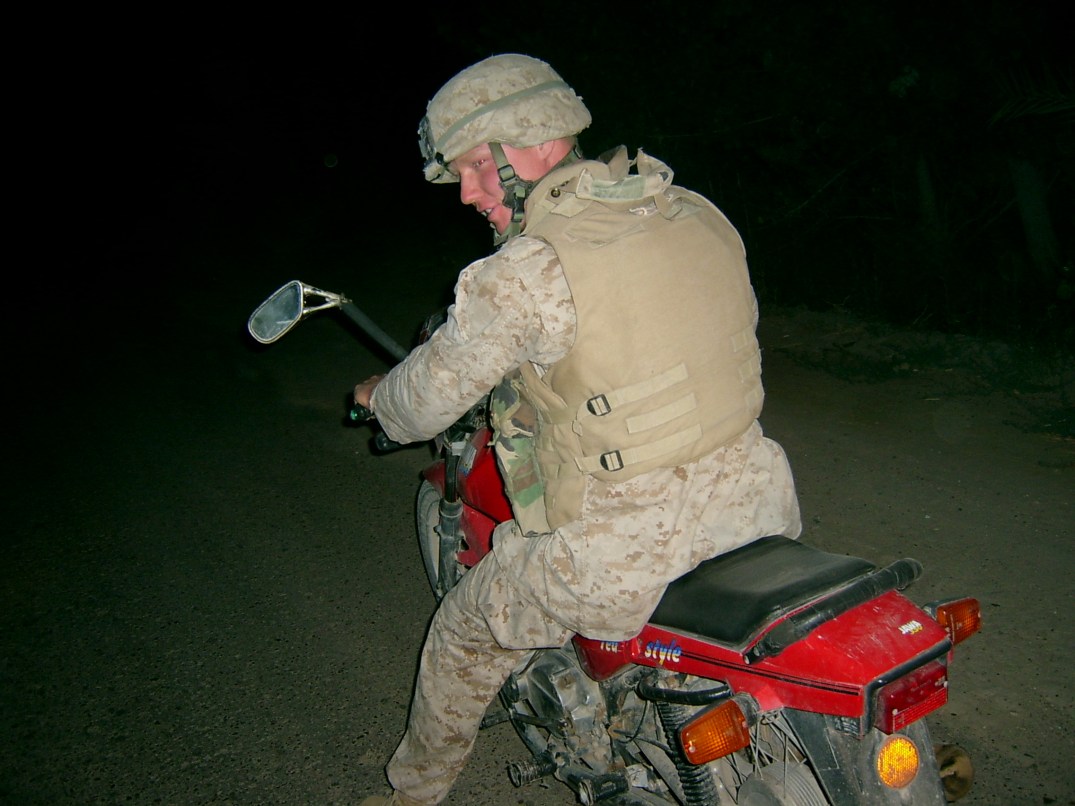
A couple of hands went up. I looked at the hands that were up, Sean O, one of my cool and calm, common sense mid western farm boy Corporals had a hand up and a grin on his face. Sean got to ride the motorcycle back to Baharia with the convoy. I am sure if anyone saw us, it was a strange sight. Six heavily armored gun trucks with a single Corporal of Marines riding a beat up old Jawa motorcycle in the middle.

SAMSUNG DIGIMAX 420
SAMSUNG DIGIMAX 420

We dropped the two prisoner off with our local HET (Human Intelligence Exploitation Team) folks, never heard from them or about them again. The motorcycle stayed around for a day, and was taken away by Battalion (probably a good idea, but it sucked at the time). But we had fun, and Sean got to ride a red motorcycle across the most dangerous part of Iraq in the middle of the night. It was a good night.

Ryan

April 26, 2004. Echo Company 2/1

Probably the single hardest fought battle of the 2004 deployment was on the morning of April 26, 2004 between elements of Echo Company and a large insurgent force. I have seen estimates of insurgent strengths from ‘only’ 75 up to 200 – both numbers easily outnumbered 2nd platoon, even with attachments. Echo company was led by Captain Doug Zembiec and 1st Sgt Bill Skiles – both men were proven combat leaders with aggressive natures, and second platoon was staffed by a once in a lifetime mix of excellent squad leaders, corpsmen (medics) and a top notch machine gun team.

Embedded with 2nd platoon was a war correspondent from the LA Times, Rick Loomis. Rick was primarily a photographer, but for this very emotional battle stepped out of his comfort zone to write this excellent article of the fighting.

—–Imagine Dying – By Rick Loomis, LA Times.

2nd Platoon and attachments took over a dozen injuries, 4 life threatening, and Aaron Austin, a popular and hard charging machine gunner, was killed. Echo Company’s CO, Captain Zembiec wrote the following letter to his wife Pam describing that day:

From page 169-70 Selfless Beyond Service, by Pamela Zembiec,
….Finally, two weeks after Echo Company was ambushed in Fallujah, I received a letter from Douglas.
April 30, 2004
My marines and I got in a big fight on the 26th of April. My men fought like lions and killed many insurgents. The valor and courage of the marines was magnificent. The marines fought with such ferocity that any marine who went before us would have been proud. We had no less than 30 rocket-propelled grenades fired at our position and no less than 4,000 rounds of enemy machine-gun fire shot at us in the first 12 minutes of the fight. The enemy closed within 15 meters of our position before my marines forced them back. An insurgent fired at me from 20 meters away with an AK-47. His bullets whizzed by and between my legs. A bullet or a piece of shrapnel hit my left knee and a bullet ricocheted onto my dick plate (groin protector). It is our company standard operating procedure to wear them, and now you can see why. I threw a grenade at the enemy who shot at me. Sweetheart, when I ran over to the northern building we held to check on my marines at that position, I said, “Everything’s going to be OK.” The squad had a lot of injured and one marine who was fighting for his life, LCPL Austin. Later, two of my marines, LCPL Payne and PFC Sleight, said “Sir, you motivated me. When you showed up in that room I knew everything was going to be all right.”
I wanted to stay and fight, but I have four seriously wounded marines, so I told Warhammer 2 to fall back. The tanks requested showed up and really helped out. I am writing up two of my marines for the Silver Star, one posthumously as LCPL Austin didn’t make it. Many more I am putting in for the Bronze Star, and these are Marine Corps Silver Stars and Bronze Stars. When it was all said and done, 13 marines and sailors were wounded, and one of my marines killed. My marines killed at least twelve insurgents, and after we pulled out of our positions, we called in Cobras and mortars and killed many, many more. My men deserve official recognition of their battlefield valor. I couldn’t be more proud of my men. With men like the marines of Echo Company defending our nation, we will live free, forever.
The marines and corpsmen who medevaced our wounded, under fire, are true heroes. The marines who fought down in the alley, under fire the whole time, are heroes. The marines who fought on the rooftops are heroes. You would have to ask my marines how I performed that day to get an unbiased opinion. I think you will find that I made good decisions from the front, the only place I know from where to lead. I was unashamed when I shed tears for Austin. I told my men Austin was a warrior, and we will honor him by slaying more of our enemies, that his death will only strengthen our resolve. He died a warrior’s death, throwing a hand grenade at the enemy.
Here is a video link to some audio taken during the fight by Rick Loomis, and some interviews done after the fighting.

The following account from ‘Doc’ Duty concerned the CCP (Casualty Collection Point) and evacuation of the wounded from the fighting that day. This comes from correspondence between Doc Duty and Aaron’s mother, De’on Miller (this is reprinted with express permission from De’on)

On that day I was woken up early in the morning by one of the other Marines in HQ platoon to inform me that 2nd PLT (the one Aaron was attached to) had been sent on a mission to a cluster of houses about 500 meters away in order to take out a suspected sniper/mortar position that had been harassing us the past couple of days. He said I needed to get up and get my gear on in case of emergency.
            At about 1030 am (I think) the radio operator got a call that we had an urgent casualty (which I later found out was Zach Fincannon) at 2nd platoon’s position, and we needed to get there ASAP. We loaded up and trucked over there and found that not only had he been wounded pretty badly (he later lost his lower left arm) but that Curnutt, Valencia, and Covington had been hit too. So we got them loaded up. (This was during the time that Aaron was doing what he did. I remember hearing a grenade go off across the street where he was, but I figured it was one of theirs because they were using them too.)
            As we were preparing to roll away from the house, it came over the radio that we had another urgent casualty in the 2nd house and he needed immediate MEDEVAC. 1StSGT Skiles called for the XO to launch the 2nd wave of MEDEVAC vehicles. We continued to the casualty collection point over at the battalion CP about three miles away. During that time, the CO had ordered a withdrawal and told the XO to stay where he was and that they’d bring the casualties to him.
            After we offloaded the four that we had, the rest of the MEDEVAC crew took off to the hospital with the 1st set of four. I elected to remain at the CCP to wait for this second guy (we didn’t know who it was or what had happened). After about twenty minutes of waiting, I saw the Company Gunny, who had gone back to the FOB for ammo re-supply, pull up into the Battalion area because he had heard over the radio what was going on. He told me that if they hadn’t shown up in five minutes, we’d go get them.
            Five minutes passed and we had just loaded up when two more HUMMVEE’s came barreling into the area and screeched to a halt in front of the door to the BAS (Battalion Aid Station). One of them had Gomez-Perez, Magana, and someone else (my memory eludes me) in it, and the other had Aaron by himself. After checking on those three guys to make sure they wouldn’t die on the trip, I went over to where Aaron lay stretched out on the wooden trunk in the bed of the truck. He was still alive and breathing and someone else was talking to him.
            I jumped into the truck with LT Cooper (our Doc) and started to assess him for transport. He started slipping during that. Someone (who we later found out was the 18D Army special forces medic) had performed a cricothyroidotomy (where you cut a hole in the throat and insert a tube so he could breathe), and had put the wrong tube in. We didn’t see why he’d done it in the first place, because #1: Aaron didn’t have an airway injury; he was hit in the chest, and #2: he did it incorrectly. He had also inserted an IO IV line, which is where you insert the catheter in the sternum bone, which was done correctly, and necessary at this time as Aaron’s veins had collapsed from blood loss.
            We tried to unf— the cric and insert the proper size tube, which we finally did, and then I performed a needle chest decompression which is the preferred treatment for chest injuries, because it relieves the pressure on the lungs and heart caused by a sucking chest wound. Aaron had two of them. After re-bandaging those two wounds, which were done hastily and sloppy (due to the amount of fire they were taking I’m sure) we checked the line in his chest bone.
            During his thrashing about (some of those procedures are uncomfortable to say the least, but they work) he had ripped the line out. I decided not to waste time trying to start another one. He died shortly after, right after I came back from checking on the other wounded guys one more time before we rolled. I revived him with a cardiac thump and screamed for someone to get me an Ambu-bag, which we use in the field to artificially ventilate the wounded. One was tossed to me and Dr Cooper reminded me that I probably shouldn’t try to resuscitate him due to the lack of successful attempts in medical history.
            “F— That Sir!!!” I screamed at him, and then told the drivers to roll. He stopped breathing again after about five minutes and I hooked the Ambu-bag to the tube in his throat and instructed one the Combat Aidsmen Marines (given special first aid training to assist us when we are wounded or we have too many to handle on our own) on how and when to compress it, thereby forcing air into his lungs. I checked his pulse and found none. So, against my Dr’s orders, I began CPR. I continued it the entire ride to the hospital and every now and then (when you’re supposed to), I felt for a pulse and found one.
            When we arrived at the hospital, he had a weak pulse and was still being bagged by SSGT Gresham (2nd PLT Platoon Sergeant) and I was still doing the chest compressions in order to assist his heart with pumping the blood. The hospital staff (God bless their souls) took over when we pulled up.
            I found out later that Aaron had passed again during prep for surgery. I guess if I’da stopped, he’da died then too. But I wasn’t letting him go. They tried again and again, but couldn’t bring him back from that one.
            He was pronounced dead by the doctor there. We prayed over his body for a moment and the Echo Honor Guard (1STSGT Skiles, me, and two other Marines—I can’t remember which ones they were) carried him to the morgue. We loaded up and went back to the defensive position where I gave my report to the Company CO, CAPT Zembiec, and I know I saw a tear in his eye.
            There isn’t much more to tell, but if you have any questions, please don’t hesitate to ask—Doc Duty

LCpl Carlos Gomez-Perez, LCpl Thomas Adametz, and LCpl Aaron Austin (Posthumous) were awarded the Silver Star for gallantry in action. They fought wounded, outnumbered, and flanked by a determined enemy. They, and the rest of the men from 2nd platoon, fought like Lions. Semper Fidelis.

This isn’t SASO. We were told there would be SASO.

Doing pre-deployment training back on Camp Pendleton and later at March Air force Base, we were told that we would be conducting a SASO mission. SASO stands for Stability And Support Operations. It is a fancy way of saying that we were going to be using a soft touch to win hearts and minds and help the Iraqi’s rebuild their damaged country. We did know that we were going to Fallujah, and we knew that Fallujah had been a hotbed of activity leading up to our deployment there.

Our briefings on what the 82nd Airborne unit had been doing there included a fair amount of contact they had been having, but pretty limited casualties and a single KIA. When we actually arrived in country and started doing a few ride alongs with them my subconscious was screaming at me that something was wrong. Looking back I think what my brain was trying to tell me was that their unit culture was one that was extremely averse to contact (fighting). Not that I think they were individually scared, it just seemed that the command climate had instilled in them the idea that if a firefight started up they needed to extract as soon as possible, perhaps to keep collateral damage down, I don’t know. The SFC (Sergeant First Class) that I was doing my relief in place with told me that on night counter mortar patrols they tended to have some sort of contact about half the time. The night I went out with them, we didn’t have any contact.

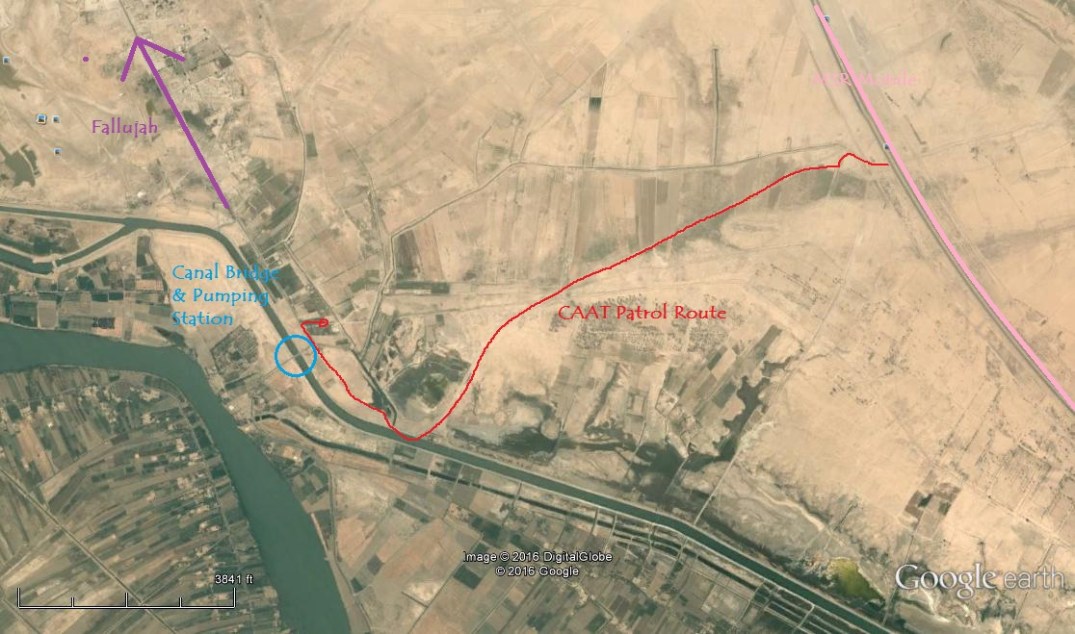
In late March, 2004 I led night counter mortar patrol around our Forward Operating Base (FOB) Camp Baharia. I had 5 Marines in my gun truck, 3 Marines in Sgt Shawn P’s TOW missile truck, and two or three guys from the 81’s platoon who wanted to get outside the wire on a patrol. Cpl Thomas H had his two gun trucks with a total of 8 more Marines on the same mission, but I had sent them to patrol an area to the North and East of my objective. Here is where the patrol areas were:

Night Ambush 1.jpg

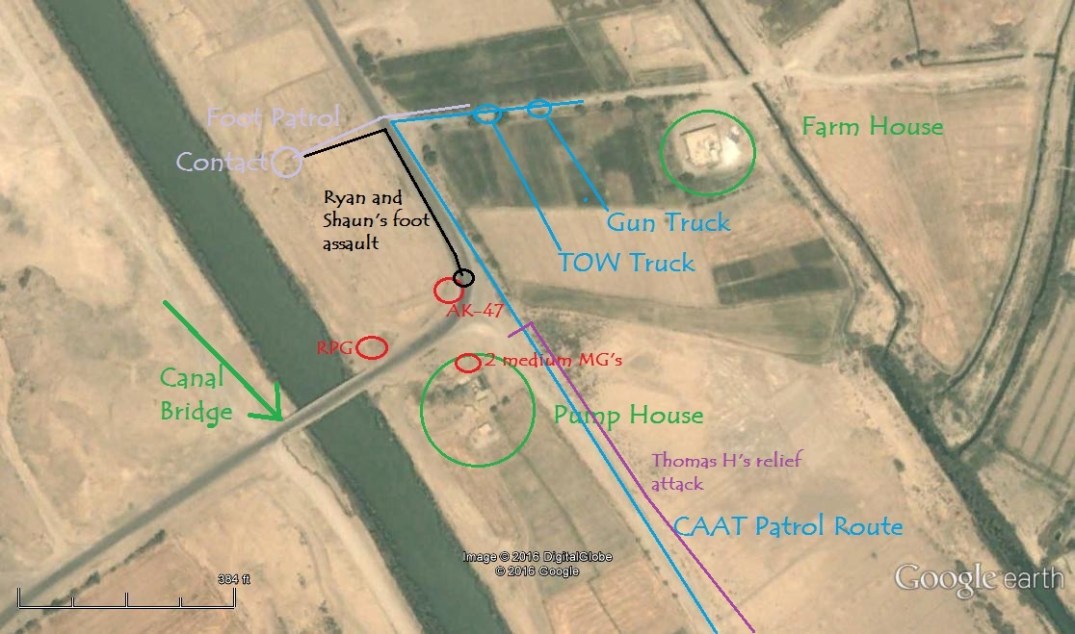
I was taking my patrol to the red circle, a Canal Bridge used to access the Zaidan Peninsula, and a pump house servicing the canal.

Night Ambush 2

We hit a dirt road (Red) directly off of MSR Mobile (pink). We passed by the pumping station and parked in the long driveway of a nearby farm house just to the north of the bridge and pump station.

Night Ambush 3

I want to stop and emphasize here, it was pitch black that night. And this all happened at about 0100 hours. Fighting in pitch black sucks.

It started off according to plan, we conducted a swift vehicle movement passed the pump house and bridge, and staged the vehicles in the driveway of the farmhouse to the north (Blue). Mistake one was that I left the vehicles facing towards the farm house on a very narrow road flanked by drainage ditches. Shawn P, an 81 dismount, and I did a foot patrol (Lavender) towards the canal on a raised flat berm (second mistake, the city lights of Fallujah had us back lit horribly). About half way across the berm we were fired upon by a single RPG shot that went high, and then by a moderate volume of AK-47 and medium machine gun fire from some prepared fighting positions to our south (Red). The bullets coming by seemed to be passing at about ankle level. We returned fire, sprinting back towards the vehicles as we did so. After a brief stop at the vehicles to get the drivers and gunners instructions to turn the vehicles around and help us advance on the enemy positions, and a quick SITREP (Situation Report) into the Battalion TOC (Tactical Operations Center), I sent the 81mm Mortar dismounts on a flanking attack to the east. Meanwhile, Shaun and I moved up along the berm (Black) to close with the enemy firing positions. While all this was going on the RPG gunner managed to fire 4-5 more RPGs in our general direction, and the medium MGs kept up a fairly steady stream of inaccurate fire.

As Shaun and I advanced I was able to pick out muzzle flashes coming from a raised berm with a fighting hole dug in it. What I didn’t realize was how close the muzzle flashes were. I fired at them, they stopped, and then as I started to move up the 5 foot tall berm the AK-47 fired again, I could actually feel the muzzle blast of the rifle. I was only about 4-5 feet away from the edge of the fighting hole. The AK-47 and I exchanged close range fire for what was probably 8-10 seconds, I wasn’t able to get high enough up to get a good shot down into the hole. The insurgent wasn’t able to get high enough out of his hole to get a shot on me. I had two realizations in those brief seconds, first that this was supposed to be SASO, so I didn’t have any frag grenades. Secondly I realized that at this range if I ran dry on my magazine that I may not get a chance to reload. So I pulled back away from the fighting hole. I then realized that Shawn was still about 20 meters behind me, he had stopped because his TOW vehicle had successfully turned around and joined the fight. He was trying to direct fire, and pulling our lone AT-4 shoulder fired missile from his truck.

My gun truck had gotten stuck turning around, but at least the .50 cal was in a position to provide some limited fire support against the pump house where the two medium MGs were firing on us from. John F was manning the TOW that night, and switching between the night optic on it (no TOW missiles… this was supposed to be SASO after all) to acquire targets, and then back to his mounted M240 to engage those targets, and then back again.

Shawn fired the AT-4, and hit part of the pump house. The firing from the pump house didn’t stop but it did seem to slack off. About this time Thomas H and his two vehicles came screaming in, not fully knowing the situation, they stopped RIGHT NEXT TO THE PUMP HOUSE. I sprinted over to his gun truck and yelled for the gunner on the MK-19 automatic grenade launcher to spray the pump house down at point blank range. He did that with great gusto.

Thomas and I quickly gathered up what dismounts we could and breached the gate to the pump house. Meanwhile the Shawn’s TOW vehicle scanned the two fighting holes and found them to be abandoned. As we cleared the pump house we found spent shells all over, but no people. At the back of the small compound was a small building that looked like a residence. Thomas kicked the door in, and I entered right behind him. Inside laying in the dirt corner of the room was an old man with a young woman and a little girl. They were all laying on the dirt floor, the man shielding the woman and the child from us. The man frantically pointed at a small back door covered by a blanket and gestured like he was holding a rifle, we took it to mean ‘the bad guys went that way’. The back door actually opened up outside the compound, and there was a small shed in sight. In the shed we found an old Browning WWII vintage .30 caliber machine gun and some freshly bloody rags.

We never did recover any bodies from the fight that night. While I am almost certain I hit the guy in the fighting hole, there was never a way to prove it. We secured the scene until about 0400, and realizing that we had shot through the majority of our ammunition, we made the decision to return to Baharia to refit with our captured .30 caliber MG in tow.

Fox Company offered to send an element out with us to re-occupy the bridge and pumping station. We headed back out as soon as we could get everyone together. When we arrived back at the pumping station nearly all of the evidence of our fight there had been cleaned up. The bullet holes and the blast marks from the AT-4 and MK19 were still there. But shell casings, bits of clothing, the bloody rags – all of it had been removed. Here is a video of our return to the pumping station.

Night Ambush and the morning after

As far as I can recall this was the first serious contact the battalion had on this deployment, of course there had been the debacle with the 82nd and our leadership at a town council meeting, but that had been the 82nd’s show. This was all us. Our first contact with the enemy, and we had shown then that we weren’t going to back down from a fight.

The Marines had landed. And this wasn’t going to be SASO.

Ryan.


Crossing the Border

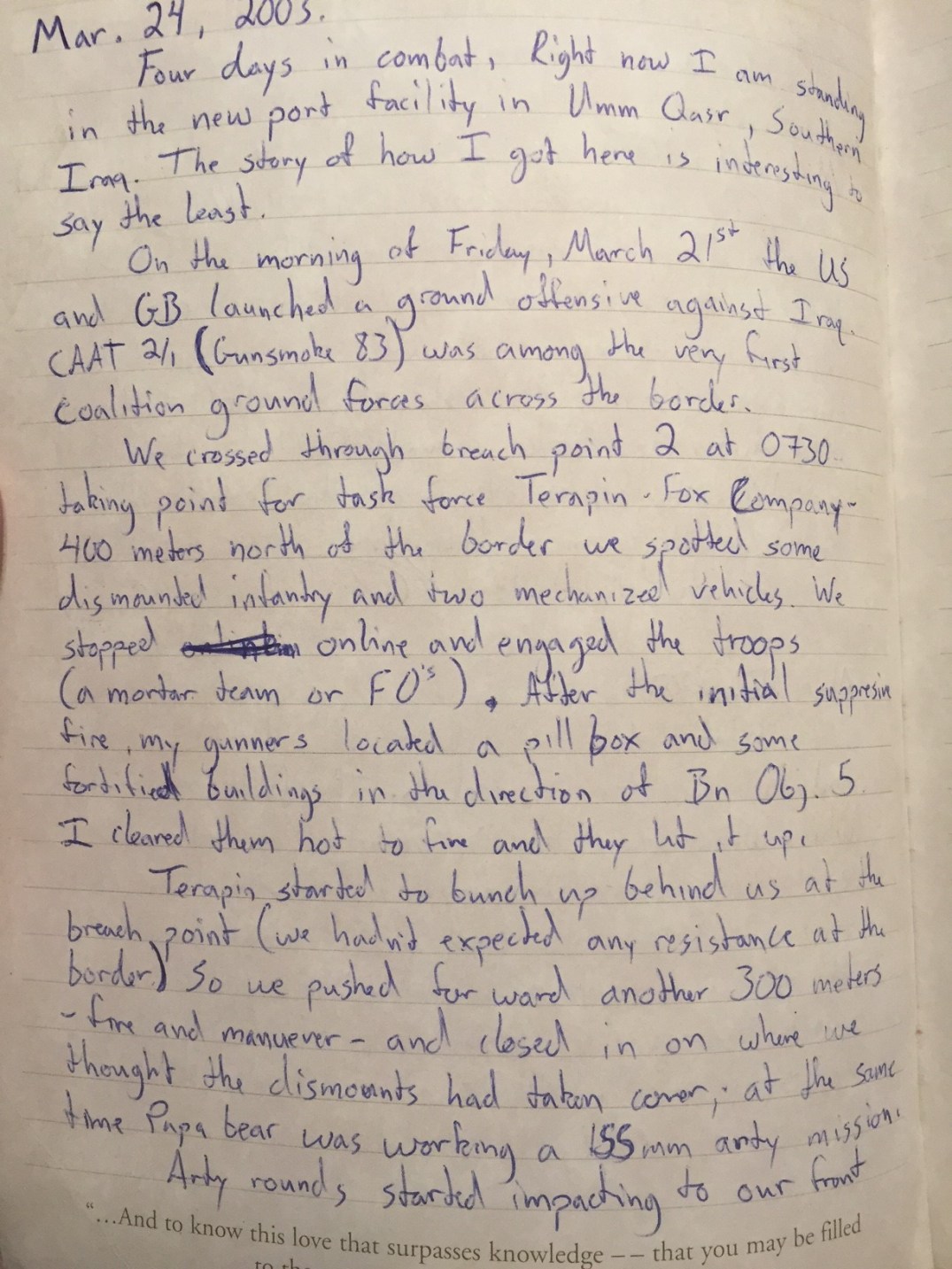
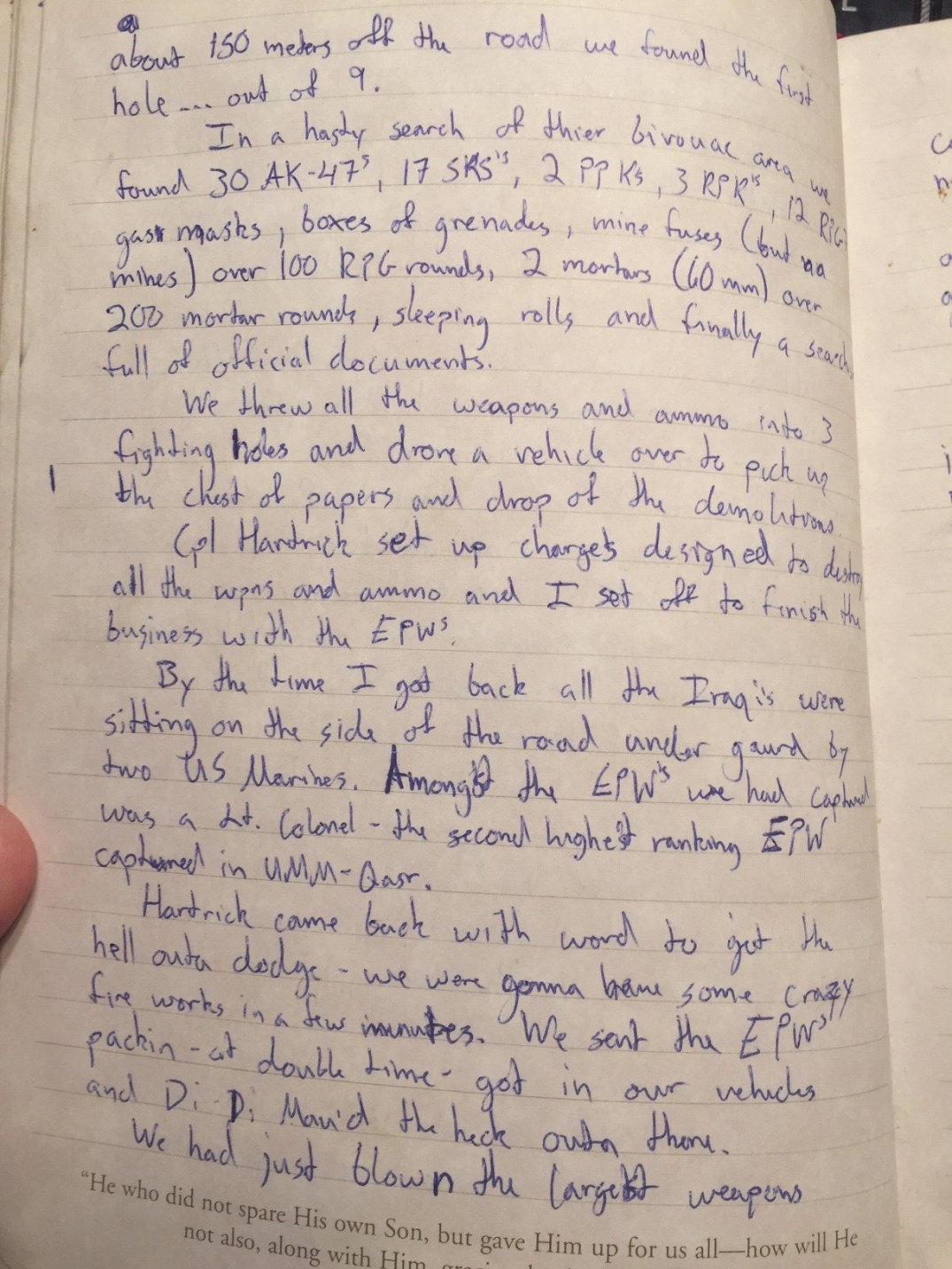
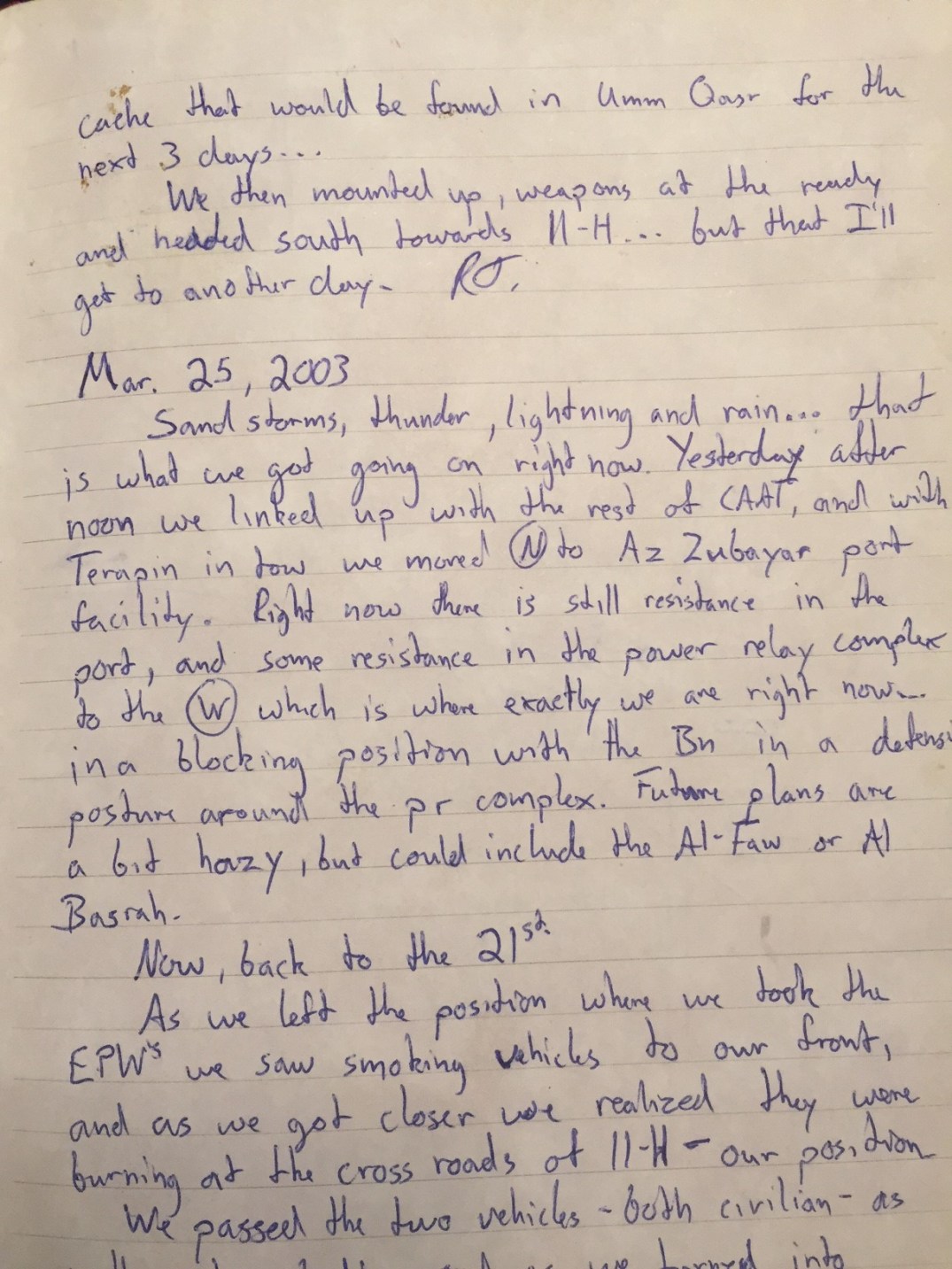
I will let my ACTUAL journal do most of the talking for this post.

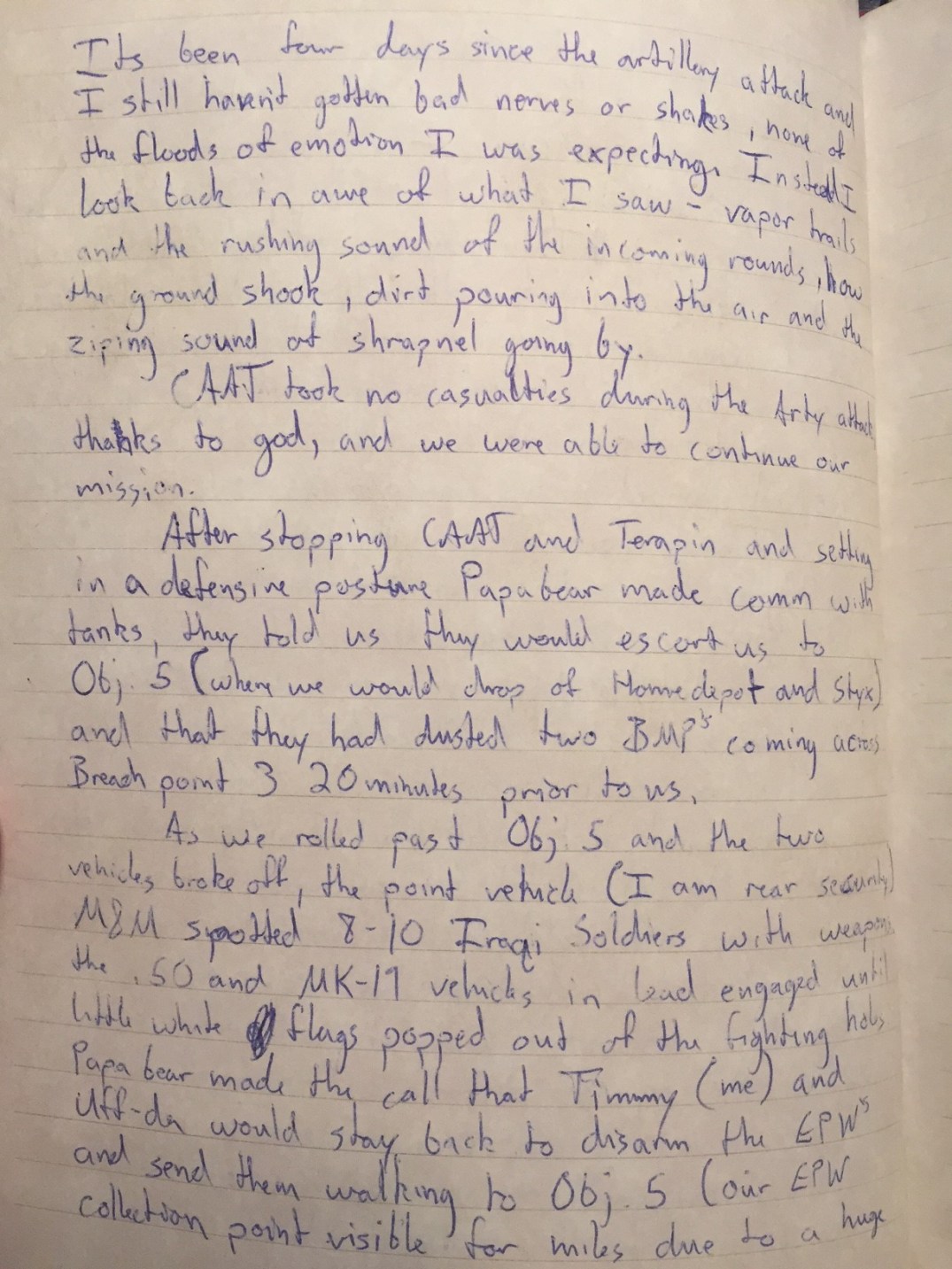
March 21, 2003 2nd Battalion 1st Marines crossed the Kuwaiti border into Iraq and engaged elements of the Iraqi border guard and the 51st Mechanized Division. CAAT platoon supported Fox Company’s attack by clearing the initial breach point and escorting Fox Co (call sign: Terrapin) to their objective, the Umm Qasr new port facility. On March 24 I wrote the following journal entry:

Journal 1

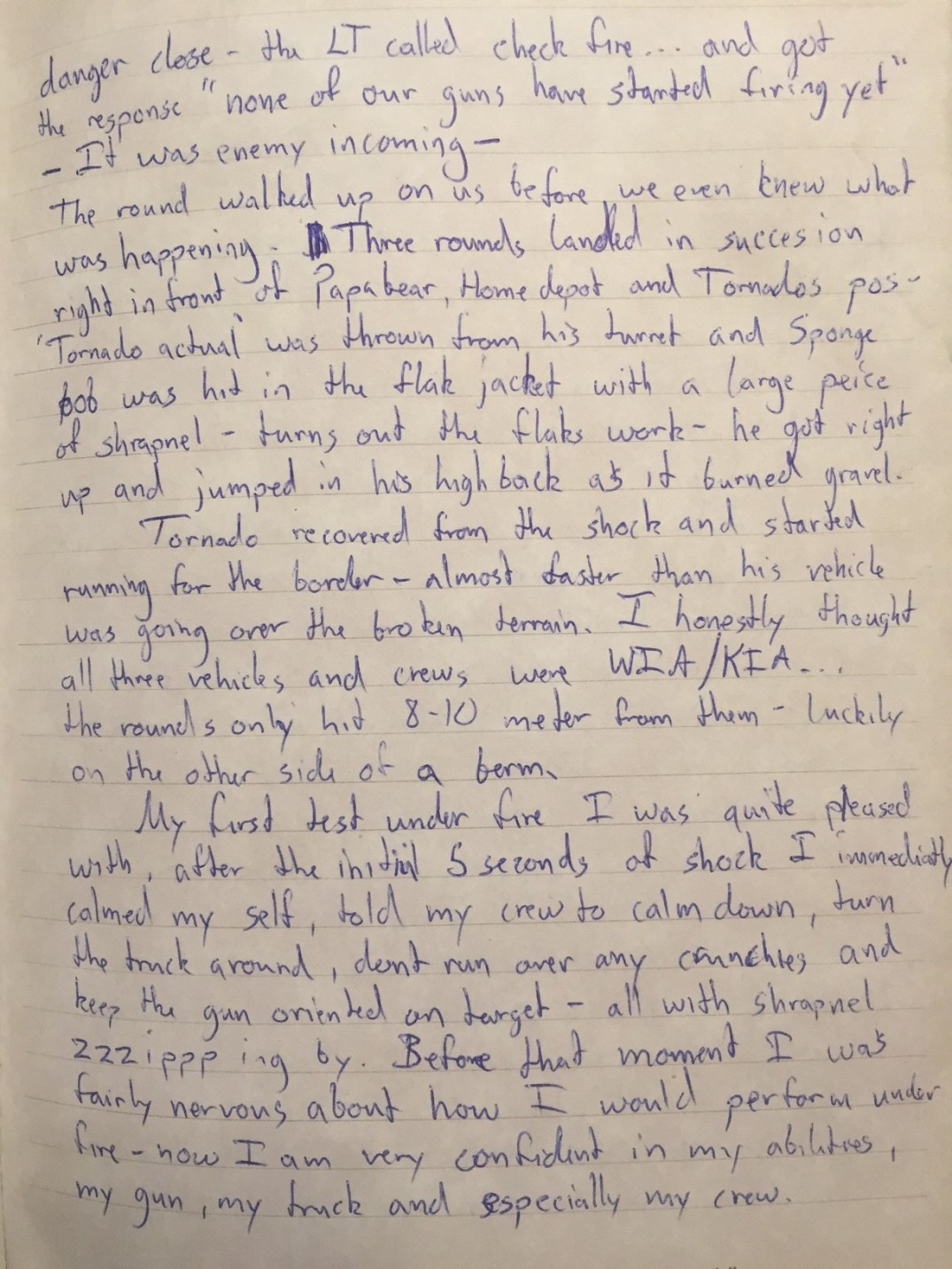
Two things from this entry, first I am not sure why on earth looking back that we wouldn’t expect any resistance at the border. Maybe there was good reason, or maybe I was in a bit of denial. I have no idea. Second, I THINK the ground offensive had actually launched the morning prior. The spearhead units of I MEF were crossing the border and were pushing through Safwan North towards Nasiriyah.

Journal 2

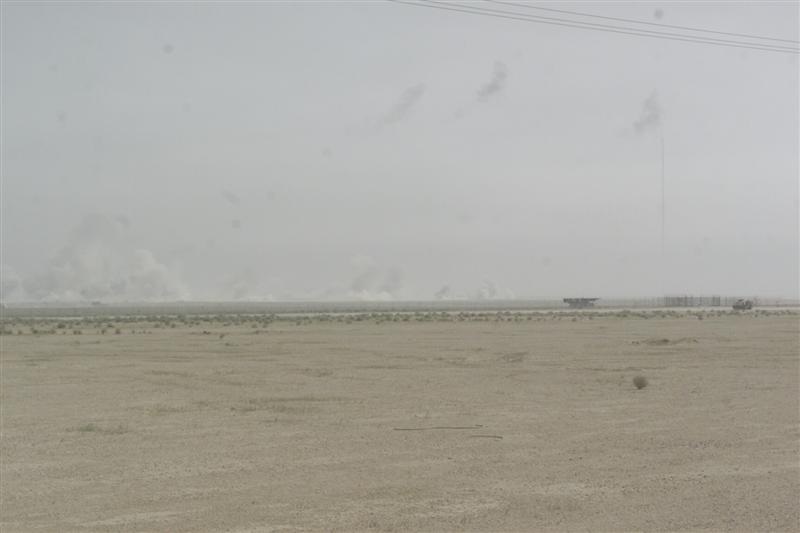
Here are some pictures taken by journalists attached to the battalion of the incoming artillery:

Arty from across the berm

The above picture was actually taken from the Kuwait side of the berm, you can see on the right hand side what appears to be one of the British Bridging units that helped us cross the tank ditch.

Across the Border
Across the Border

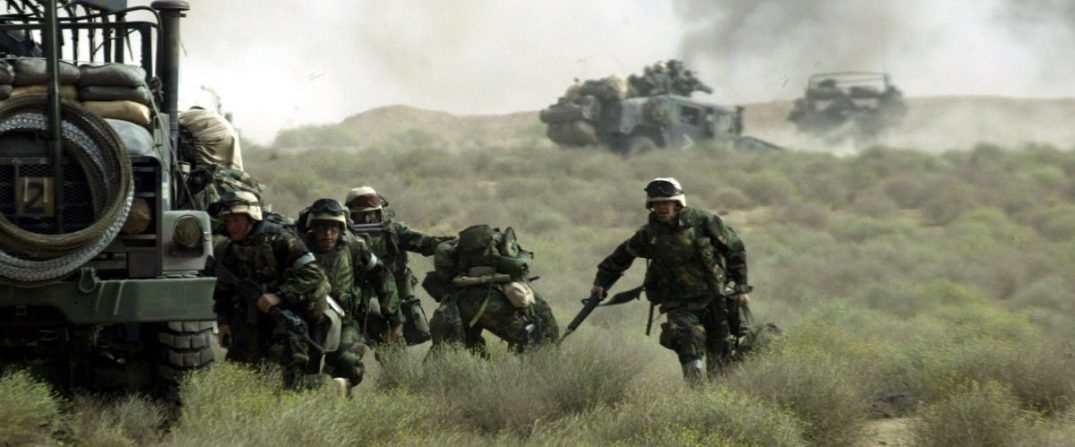
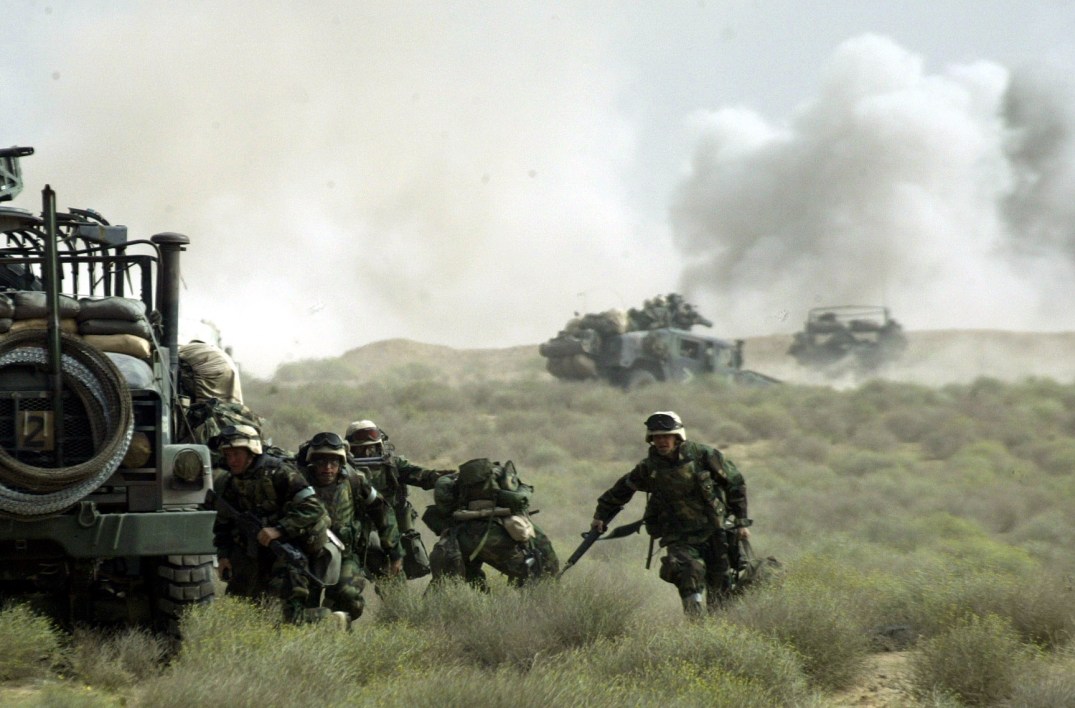
Here you can see Fox Co and 81mm Mortar platoon in the large troop trucks, in the background the initial artillery shells are falling directly in front of the CAAT platoon screening forces (I am the far right humvee)

IRAQ
IRAQ
IRAQ
IRAQ
IRAQ
IRAQ

Arty and F Co Marinescropped-operation-iraq-freedom-slide-show-43.jpg

MARINES OF FOX COMPANY "RAIDERS" TAKE COVER IN SOUTHERN IRAQ
Marines of the U.S. Marine Expeditionary Unit (MEU) Fox Company “Raiders” take cover from Iraqi fire as British artillery rounds explode behind during the early stage of the push into southern Iraq to take control of the main port of Um Qasser on March 21, 2003. US and British ground forces launched assaults into Iraq in a bid to topple Saddam Hussein. REUTERS/Desmond Boylan

I left the captions the photographer had placed on the pictures. It is important to note that we were taking both friendly danger close artillery from a British unit, AND fire from an Iraqi D-30 155mm artillery battery that was set up, ironically, right outside of our main objective.

Journal 3

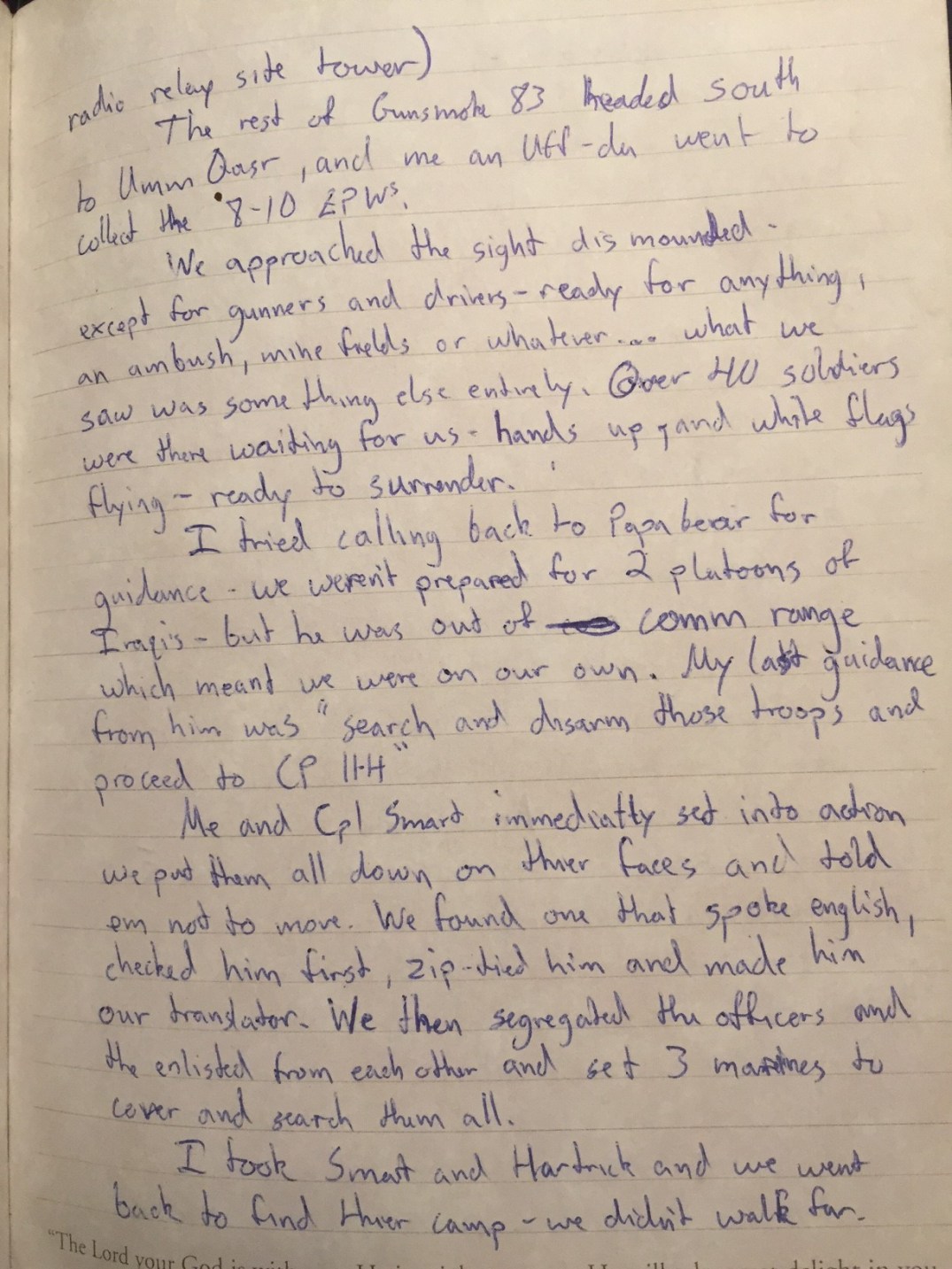
Battalion Objective 5 was a massive radio antenna set up that could be seen for miles around. The British unit we were attached to for the invasion was planning on using it as an Enemy Prisoner Of War Collection Point (ECP).

Journal 4

Echo Company found a much larger group of Iraqi soldiers who surrendered, but they had a lot more than 8 guys and two humvees to deal with them. One of the prisoners was a Lt. Col. We also found maps, uniforms, and various other items of interest.Journal 5

Journal 6

We ended up spending a few days at Az Zubayr waiting for the British to take over the ports and surrounding area, afterwards we got our marching orders up to An Nasiriyah to relieve Task Force Tarawa.

We had a very eventful first day of the war, and I am proud of the fact that for the first 72 hours of the war my squad was able to operate independently receiving orders via radio and being left to accomplish tasks with no supervision. We were fairly lucky that no one was seriously injured in the artillery barrages on the first day, nor in the brief skirmishes we found ourselves in for the net two days around Umm Qasr and Az Zubayr.

Ryan.

Getting shot and almost getting shot

In July of 2004 Fallujah was on fire, sometimes literally, but always figuratively. Echo Company and Fox Company were manning outposts all along the edges of the city protecting MSR Mobile (Main Supply Route) from the huge population of insurgents that had moved in. Route Mobile was the main road and only remaining usable road connecting Baghdad to the Al Anbar province capital of Ramadi. MSR Michigan was the other major road running from Baghdad to Ramadi, but ran through the middle of Fallujah and was therefore unusable by coalition forces.

CAAT, Echo Company and others engaged in a long series of very heavy firefights along the stretch of MSR Mobile that ran directly by the edge of Fallujah’s Iskari neighborhood. Here is a sampling of one of the many fights that went on as insurgents tried to disable passing supply convoys and the Marines tried to kill those insurgents….

Convoys getting hit along MSR Mobile

I took the above video from the South East corner of TCP-1 the day before my driver Danny C got shot in the arm and two days before Joe C and Patrick L took some bullet frag in the arm and shoulder. Jim W took a machine gun round in the helmet and suffered a skull fracture a few days later. All in the same part of town. A couple of other guys from Weapons Co were similarly hit by small arms fire as well as a handful from E Co. Most of this fighting took place from either TCP-1 (Tactical Control Point 1) which controlled the intersection of MSR Mobile and MSR Michigan or from MSR Mobile directly to the East of Fallujah.

TCP1 Annotated

The day Danny C got hit in the arm we had the entire CAAT platoon (11 Humvees with .50 caliber Machine Guns, MK-19 automatic grenade launchers, M240 medium Machine Guns, and TOW missiles) lined up on MSR Mobile from the railroad overpass to about 800 yards North. My vehicle was the furthest South vehicle, and therefor closest to the city. We were doing a blocking position, I believe some dignitary was going to be moving through the area, but don’t recall exactly now. but we essentially sat up on the raised highway and exchanged heavy fire with insurgents in the northern Iskari neighborhood for about 30 minutes. Shane D was manning the .50 cal with David T helping load, Nathan H was behind the humvee with an M249 SAW, I was up behind the engine block on comms, and Danny C (the driver) was pulling rear security for us.

The truck had already taken multiple hits in the armor, Shane had put hundreds of round through the .50 hitting likely enemy positions, and Nathan had sprayed down near targets with the SAW blowing through nearly 1000 rounds. Danny jogged up to me and said “Hey Sgt T, I got shot in the arm”. It was like he was telling me that “Hey Sgt T, we have a flat tire”. Calm. He had a through and through wound, the round had struck him in the forearm, passed between the bones in his forearm, and exited cleanly. As we knelt behind the engine block of the humvee while I wrapped up his arm I heard a loud ‘crack’ and felt something flick my trousers in a ummm… sensitive area. I flinched a bit and checked quickly for a wound – nothing. no harm, no foul. Danny manned the comms and we moved off the road a few minutes later. Danny went back to Camp Baharia, our Battalion base, where the docs looked over his arm. Several hours later the rest of us headed back to the base and found Danny in the hooch waiting for us:

Danny in the hooch.

Turns out when the bullet passed through it fractured one or both of the bones in his forearm. Danny was sent over to Camp Fallujah, I assume to Bravo Surgical, where he was treated and had his arm put in a cast. Later that day I took my vehicle crew and our Company 1st Sgt, Richard M, over to Camp Fallujah to visit Danny before he was sent home.

Wrecking Fallujah: Part 1

So when we deployed to Fallujah in March of 2004, we were expecting SASO (Stability And Support Operations) which falls pretty low on the spectrum of combat operations – It didn’t take us long in country to figure out that we were NOT getting a SASO deployment.

This first video is from the first operation that Gunsmoke ran after we relieved the 82nd Airborne unit that we had replaced. This was right at the end of March of 2004. Echo and Fox Companies, supported by CAAT platoon mobile patrols occupied in force the Iskari neighborhood – an upscale area that encompasses most of the Eastern quarter of Fallujah. As you can see the city was almost fully intact, civilians were all over the city, and children were coming out to see who the new Americans in town were.

Patrol in the Iskari neighborhood

Less than a month later I filmed this video in the Jolan neighborhood in Northwestern Fallujah:

Patrol in the Jolan neighborhood

Mere days after the Iskari patrol the 4 American Blackwater contractors were killed in a fiery ambush and displayed to the world. My CAAT section was out on patrol that day, and I recall driving back towards Camp Baharia and seeing a huge pillar of black smoke rising from the center of the city. I didn’t know at the time what it was. In response 2/1 along with 1/7, 1/2 and 1/5 launched Operation Vigilant Resolve, and after a week of fighting in the Jolan district I took that second video. It doesn’t take long to wreck a city.

Ryan.

Welcome to the Gunsmoke Journal

For years I have used Facebook to share OIF experiences with friends, family, and my brothers in arms. I firmly believe that stories of war need to be told by the people that were there or important lessons of history will be lost forever. I hope to capture as much of my experience here as possible as well as the experiences of my comrades in arms.

Who am I? I was a Marine who served on active duty from June of 99 through May of 2008. I did three deployments during my time in the Marines. My first was a Western Pacific Cruise in 2001. My second deployment was for the invasion of Iraq in 2003. My final deployment was to the city of Fallujah for the heavy fighting there in 2004. I went on to serve several years at the Marine Corps School of Infantry on Camp Pendleton before leaving the service in 2008.

I went into these deployments knowing that they would be life altering events, particularly after the attacks on September 11, 2001. Knowing we were headed to a war zone I wanted to be in a position to record as much of it as possible. To that end I brought a video camera, some disposable cameras, a journal my wife (girlfriend at the time) had bought for me, and an eye to hold on to mementos that I thought might be pertinent to the experience. Now, more than a decade later, I still have over a dozen maps, 11 hours of digital footage, hundreds of physical pictures, over a thousand digital pictures, my journal, and a collection of artifacts that caught my eye.

I hope that this online war journal creates as many questions as it answers.

Ryan

.Timmy AK 3